Skip to content

From a farmhouse kitchen

Sunday Tunes

A free letter every Sunday from the kitchen: one old dance tune, one thing to practise and one thing to listen for.

One email every Sunday. Unsubscribe any time.

a farmhouse kitchen,

Letter no. 58

Learning an old dance tune by ear

Handwritten tune notation notebook on a wooden table

Dear player,

Chapter 1: Sit down first

This week I taught a tune by ear, the way I was taught, which is without a page of notes. I sat at the kitchen table with a fiddle on my knee and a friend across from me, and we learned one short dance tune in a single evening.

If you can hum, you can do this. You do not need to read music, and you do not need a good ear. You need a quiet room and four rounds, and a little patience with yourself.

Chapter 2: Hum it before you play it

First, hum the tune. Before you touch the strings, listen to it three or four times and hum along, quietly, until your voice knows where it goes.

I tell my students that the tune lives in the throat first and the fingers second. If you can hum the whole thing without a mistake, your hands will find it much faster than they would from a page.

Chapter 3: Four slow rounds

Then play it slowly, four times, one short phrase at a time. Round one, find the notes of the first phrase and play them over and over. Round two, add the second phrase. Round three, join them.

Round four, play the whole tune at half the speed you think you need. Slow is where you hear the mistakes, and the mistakes are where you learn. Between rounds, put the fiddle down and shake out your bow arm, because a tired arm learns nothing.

Chapter 4: Then add the bow

Only on the last round do I think about the bow. A dance tune is made for people to move to, so the bow should push a little on the strong beats and lift on the others. Do not worry if it comes out stiff. Play it a little each day this week, and by Sunday it will start to sound like itself. Next week I will write about finding the beat in a tune you have never heard before.

From the kitchen,

Maarja

P.S. The Slow Practice Recordings are made for this: each tune is played slowly, twice through, so you can hum it before you pick up the fiddle.
Earlier letters

  1. 57

    Why a slow tune is a hard tune

    Slow shows every wobble in the bow, and that is exactly why I start there.

  2. 56

    Playing in a kitchen with other people

    Where to sit, who leads and how to join in a tune you only half know.

  3. 55

    What rosin does, and how much is enough

    A small block, a few strokes and the sound of a bow that has had too much.

  4. 54

    The tunes I learned from older players

    A visit, a borrowed fiddle and the tunes that were never written down.

  5. 53

    Dance tunes and the dancers they were for

    Why old tunes repeat, why they stop where they do and what the dancers needed.

  6. 52

    Writing a tune down without losing it

    A notebook, a pencil and the marks I use to keep the shape of a tune.

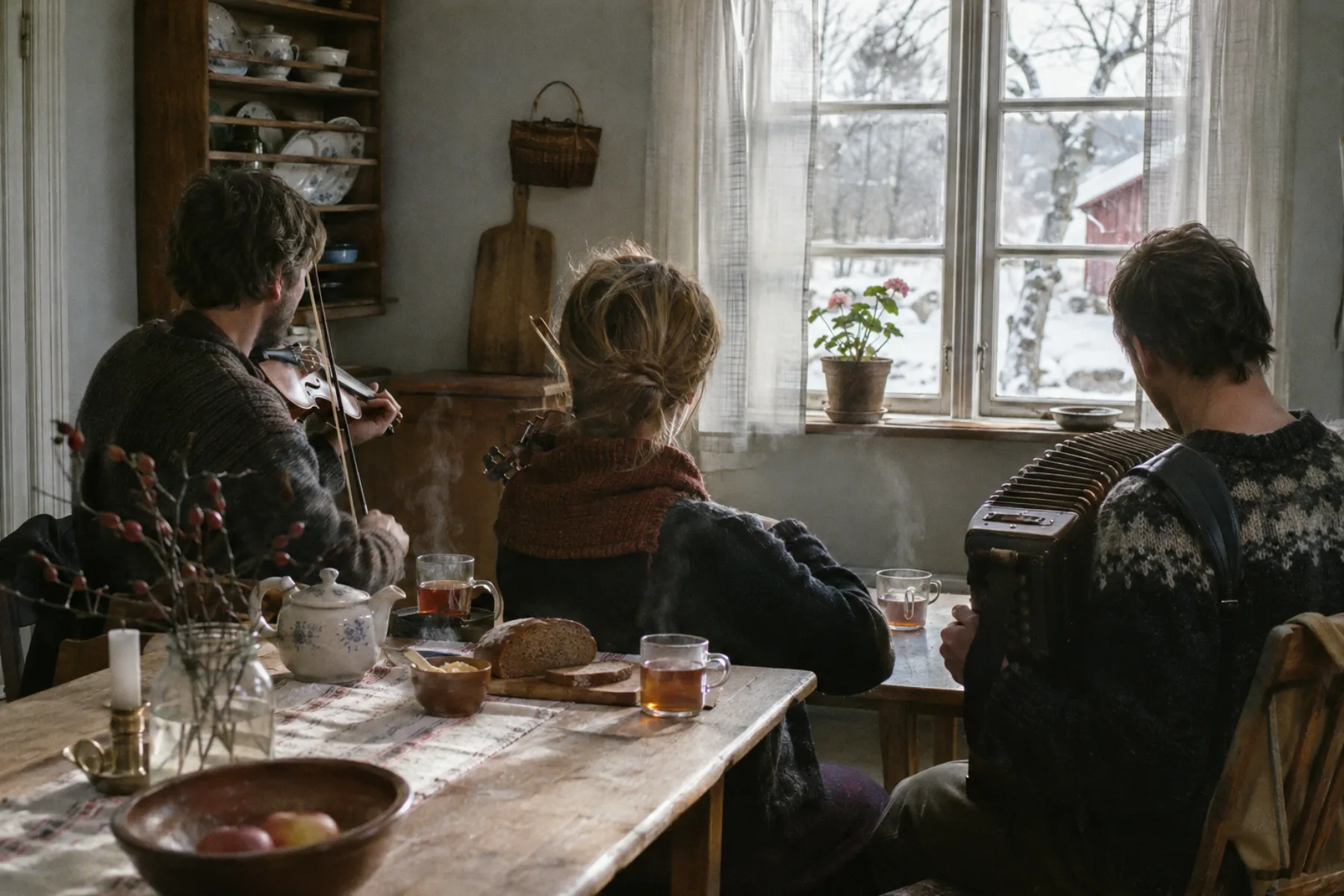
Musicians playing in a farmhouse kitchen from behind

About

About me

I have played the fiddle since I was a girl, and for the last twenty years I have taught it, in a farmhouse kitchen with a table, a stove and a window onto a field. Most of what I play I learned from older players, by ear, a tune at a time, with no page in front of us. I still think it is the best way to learn, and the way I try to teach.

Every Sunday I write one letter about one tune: how to hear it, how to practise it and what to listen for. The letter is free and always will be. What I sell is the part that is useful to you: tune books, printable practice pages, slow recordings to play along with, and two video courses for people who want to start the fiddle or learn tunes by ear.

Online course

  • Hands playing a fiddle in grey wool cuffs
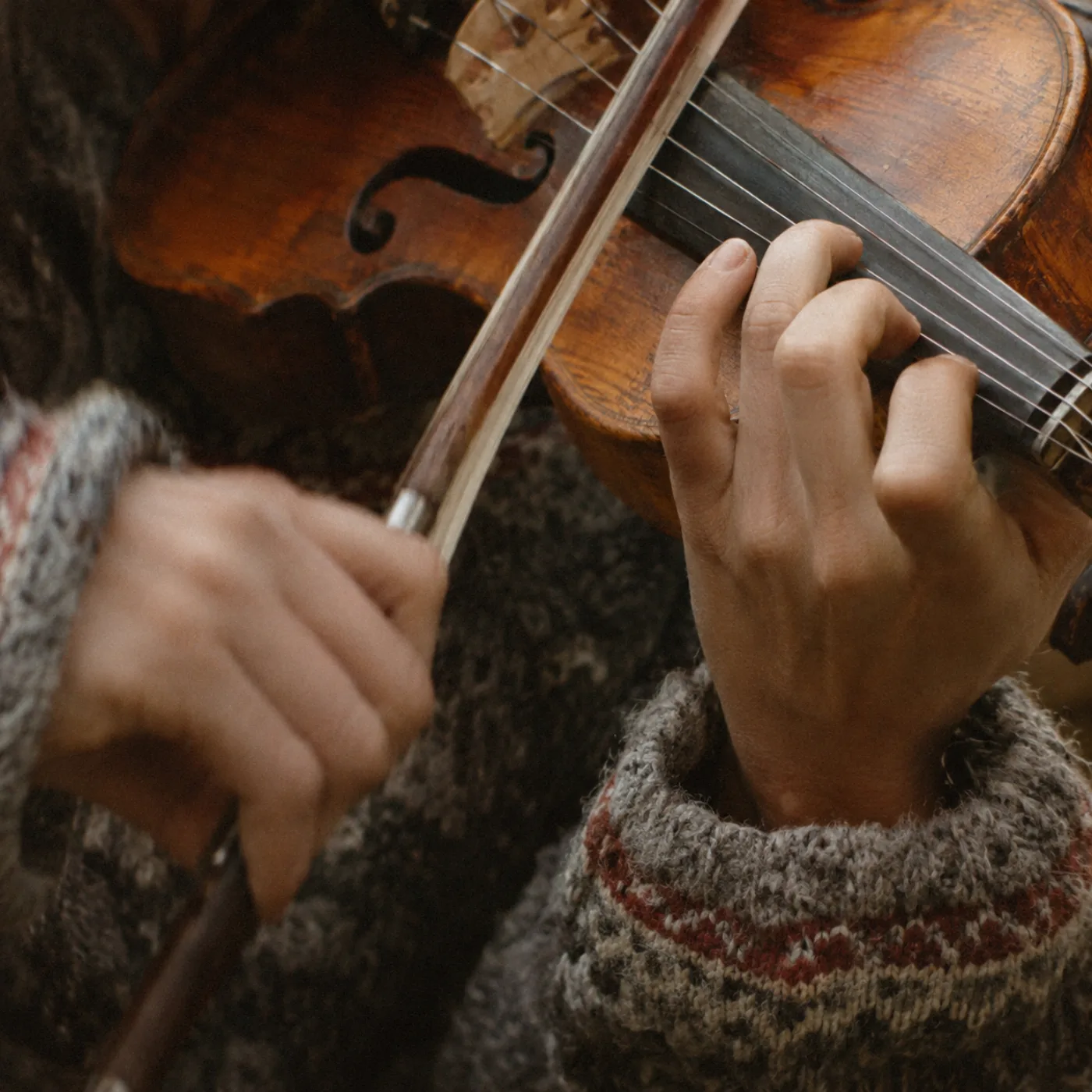
    Hands playing a fiddle in grey wool cuffs

    Video course · 6 lessons

    First Tunes on the Fiddle

    Hold the fiddle, draw a bow and play a first tune, in six short lessons for a complete beginner.

    • 01Holding the fiddle comfortably10 min
    • 02A straight bow on open strings12 min
    • 03Your first four notes13 min
    • 04A tune you can play today14 min
    • 05Practising a little each day11 min
    • 06Playing for someone else9 min